A lot of people in Montgomery pick up a chainsaw in the spring and think they can trim their own trees. It usually looks fine for a few weeks. Then the tree gets sick, or it grows back in a weird shape, or a branch falls on the fence during the next storm. The cost of fixing a botched trim job ends up being more than hiring a professional from the start. This article covers the mistakes I see most often, and what happens when you make them.
Cutting too close to the trunk
When you remove a branch, where you make the cut matters more than most people realize. If you cut flush against the trunk, you damage the branch collar. That's the slightly swollen area where the branch meets the trunk. The tree heals from that collar, not from the wound itself.
If you cut too close, you create a wound that won't close properly. Decay moves in. The tree spends years trying to compartmentalize the damage. In humid climates like Montgomery, fungal infections follow pretty quickly. I've seen trees that got one bad cut turn into problems five or ten years down the road.
The right cut is just outside the branch collar. You'll see a small ring of bark there. Cut just beyond it, at a slight angle. The tree knows how to seal that cut. It happens fast.
Removing too much at once
A common rule is to never remove more than 25 percent of a tree's crown in a single year. People skip this because they want results now. They strip the tree down thinking it will grow back bushier. Sometimes it does. Sometimes it doesn't.
When you take off too much foliage, the tree loses its ability to photosynthesize. It can't feed itself. Stressed trees attract pests. They get weak. The tree might limp along for a year or two, then decline fast. In the Texas heat, a weakened tree is an easy target for beetles and disease.
If a tree needs serious work, spread it over two or three years. Yes, it takes longer. But the tree survives it.
Topping, not thinning
Topping is when you cut branches back to stubs at the same height across the tree. It looks neat for about six months. Then the tree grows a mess of weak branches from those cut points. Those new branches are poorly attached. They break in storms.
Thinning is different. You remove entire branches back to the branch collar. You thin the crown so light gets through. The tree looks more natural. It's stronger. It grows the right way.
Most trees in Montgomery need thinning, not topping. Oaks, pecans, crepe myrtles, and pines all respond well to selective thinning. You're opening up the canopy, not cutting everything back to the same length.
Leaving stubs and branch collars exposed
If you cut a branch and leave a stub, that stub dies. Dead wood invites disease. The stub won't heal. It just sits there rotting. Insects colonize it. Decay spreads into the main branch.
On the other hand, if you cut so close that you damage the branch collar, the tree can't seal the wound properly either. It's a narrow window. The cut goes just outside the collar, removing the stub but not damaging the healing tissue.
This sounds simple, but it takes practice to see where that collar is. On young growth it's obvious. On older branches it's subtle. That's where experience makes a difference.
Using the wrong equipment
A dull chainsaw pulls to one side and requires more pressure. You're more likely to slip. You make jagged cuts instead of clean ones. Jagged cuts don't heal well. A sharp chain and a well-maintained saw are basics.
For branches over two inches thick, you need a proper pruning saw or a chainsaw. A hand pruner won't cut it. For branches under an inch, hand pruners are fine and give you more control. For branches between one and two inches, a lopper works well.
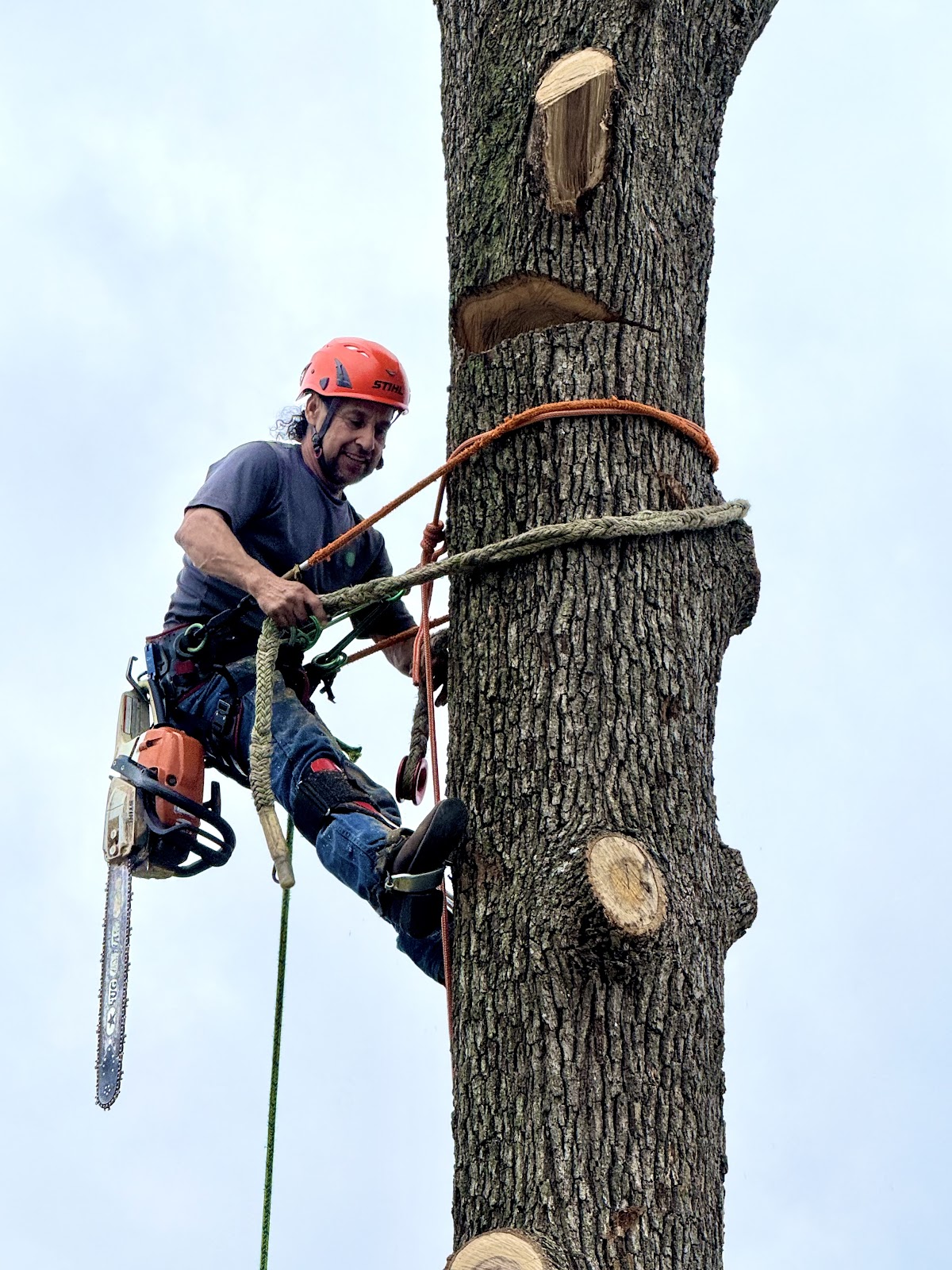
Using a ladder on uneven ground or on a slope is how people get hurt. Most homeowners shouldn't be climbing into trees with power tools. The view from up there is different. The risk changes. One slip ends badly.
When to call a professional
If a branch is near a power line, call Davis Tree Service. If it's over your roof or your neighbor's property, call us. If the tree is large and the branch is high, call us. If you're not sure how to make the cut, call us.
A tree trimming mistake can cost you thousands in tree removal later. It's not worth the risk to your property or yourself. A professional crew does it right, hauls away the debris, and leaves the tree healthy.
Davis Tree Service has been trimming trees in Montgomery for years. We know what our local trees need and how they respond to different cuts. If you've got trees that need work, give us a call.